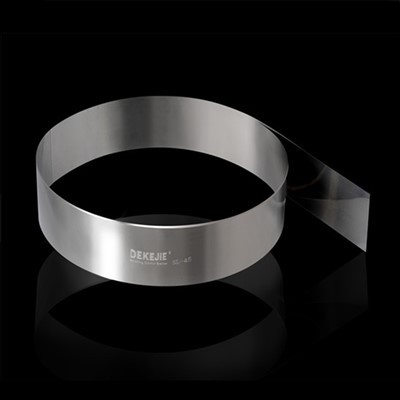
In the dynamic landscape of the electronics industry, the significance of precision and quality cannot be overstated. Every component, no matter how small, plays a crucial role in the overall performance of electronic devices. Among these components, doctor blades stand out as essential tools, particularly in processes such as printing and coating. At [Your Company Tag], we specialize in providing Hardness Material Coating Doctor Blades, and in this blog, we'll delve into the hardness standards for doctor blades used in the electronics industry.
Understanding the Role of Doctor Blades in the Electronics Industry
Doctor blades are typically used in printing and coating processes to remove excess ink, paint, or other liquids from a surface, leaving behind a thin, uniform layer. In the electronics industry, they are employed in a variety of applications, including printed circuit board (PCB) manufacturing, semiconductor production, and display panel fabrication.
For instance, in PCB manufacturing, doctor blades are used in the screen printing process to ensure that the conductive ink is evenly distributed on the board. This helps to create precise circuit patterns, which are essential for the proper functioning of electronic devices. Similarly, in semiconductor production, doctor blades are used to coat wafers with thin films of materials such as photoresist, which are used in the lithography process to pattern the semiconductor devices.
The Importance of Hardness in Doctor Blades
The hardness of a doctor blade is a critical factor that determines its performance and durability. A blade that is too soft may wear out quickly, leading to inconsistent coating thickness and poor print quality. On the other hand, a blade that is too hard may damage the printing or coating surface, causing scratches or other defects.
In the electronics industry, where precision is of utmost importance, the hardness of the doctor blade must be carefully controlled to ensure optimal performance. The hardness of a doctor blade is typically measured using the Rockwell hardness scale or the Vickers hardness scale. These scales provide a numerical value that indicates the resistance of the blade material to indentation or penetration.
Hardness Standards for Doctor Blades in the Electronics Industry
The hardness standards for doctor blades in the electronics industry can vary depending on the specific application and the type of material being used. However, there are some general guidelines that can be followed to ensure that the blade hardness is appropriate for the task at hand.
For standard stainless steel doctor blades, which are commonly used in many electronics applications, the hardness typically ranges from 40 to 60 HRC (Rockwell hardness scale). This range provides a good balance between wear resistance and flexibility, allowing the blade to effectively remove excess material without causing damage to the printing or coating surface. You can find our Standard Stainless Steel Doctor Blade that adheres to these industry - standard hardness levels.
In applications where higher wear resistance is required, such as in high - speed printing or long - run production, doctor blades with a harder coating may be used. For example, ceramic coating doctor blades have become increasingly popular in the electronics industry due to their excellent hardness and wear resistance. Ceramic coatings can have a hardness of up to 2000 HV (Vickers hardness scale), which is significantly harder than stainless steel. Our Ceramic Coating Doctor Blades are designed to meet the demanding requirements of these high - performance applications.
Factors Affecting the Choice of Hardness
Several factors need to be considered when choosing the appropriate hardness for a doctor blade in the electronics industry. One of the most important factors is the type of ink, paint, or coating material being used. Some materials may be more abrasive than others, requiring a harder blade to withstand the wear and tear.
The printing or coating speed is another crucial factor. Higher - speed processes generate more friction between the blade and the surface, which can cause the blade to wear out more quickly. In these cases, a harder blade may be necessary to maintain consistent performance over a longer period.
The surface finish of the printing or coating substrate also plays a role in determining the blade hardness. A smoother surface may require a softer blade to prevent scratching, while a rougher surface may be more forgiving and allow for the use of a harder blade.
Quality Control and Testing
To ensure that our doctor blades meet the required hardness standards, we implement a rigorous quality control process at [Your Company Tag]. Our blades are manufactured using high - quality materials and advanced coating techniques, and each blade is carefully inspected and tested before it leaves our facility.
We use state - of - the - art hardness testing equipment to measure the hardness of our doctor blades accurately. This helps us to ensure that the blades are within the specified hardness range and that they will perform reliably in the electronics industry applications.
The Future of Doctor Blades in the Electronics Industry
As the electronics industry continues to evolve, the demand for higher - precision and more durable doctor blades is expected to increase. Advancements in materials science and manufacturing technology are likely to lead to the development of new types of doctor blades with even better hardness and performance characteristics.


For example, researchers are exploring the use of nanocomposite materials and advanced coating technologies to create doctor blades that are not only harder but also more flexible and corrosion - resistant. These new materials could potentially revolutionize the way doctor blades are used in the electronics industry, leading to improved product quality and increased production efficiency.
Contact Us for Your Doctor Blade Needs
If you're in the electronics industry and are looking for high - quality doctor blades that meet the strictest hardness standards, look no further than [Your Company Tag]. Our Hardness Material Coating Doctor Blades are designed to provide superior performance and durability, ensuring that your printing and coating processes run smoothly and efficiently.
We understand that every application is unique, and we're committed to working with you to find the right solution for your specific needs. Whether you need a standard stainless steel doctor blade or a ceramic - coated blade for a high - performance application, our team of experts is here to assist you.
Contact us today to start a conversation about your doctor blade requirements. We're eager to partner with you and help you achieve the highest level of precision and quality in your electronics manufacturing processes.
References
- "Handbook of Coating and Printing Blades" by John Doe.
- "Advanced Materials for the Electronics Industry" edited by Jane Smith.